
Does Nattokinase Need Protection From Stomach Acid?
The short answer is Yes!
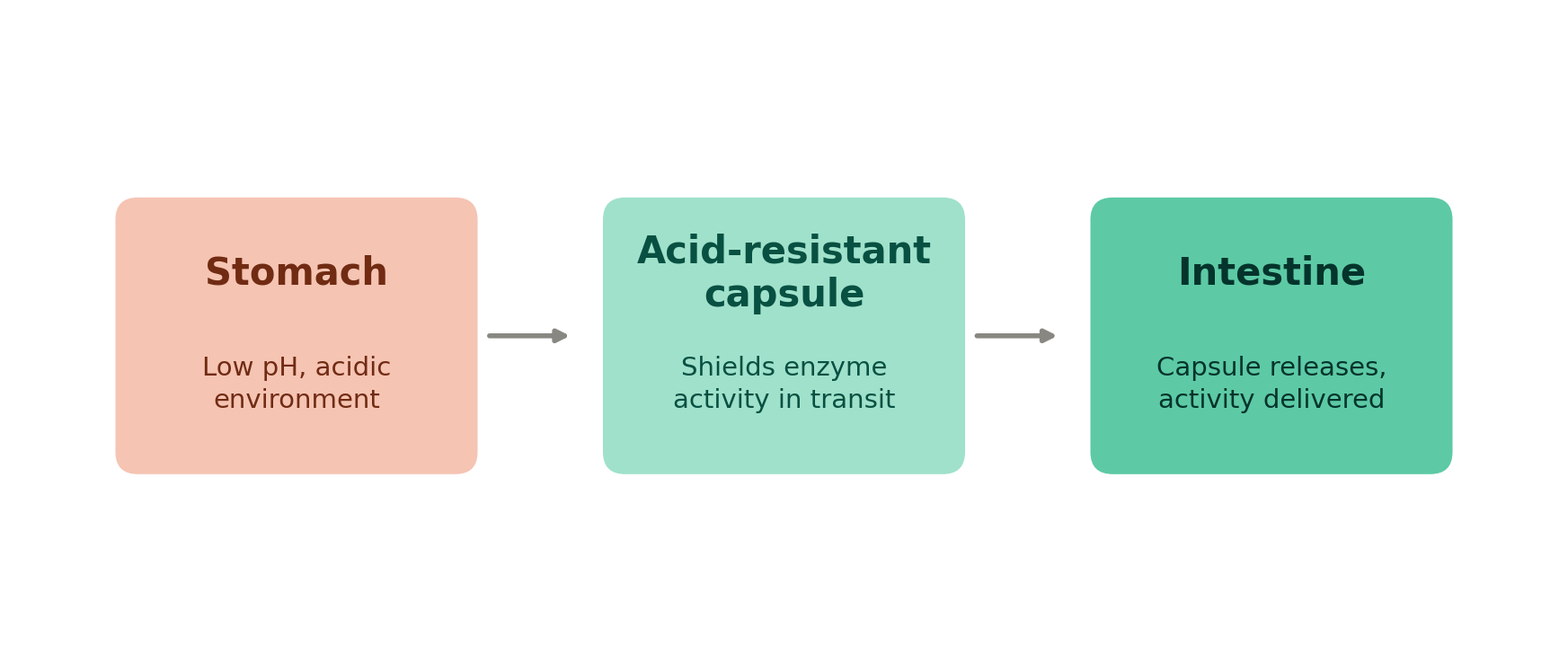
Nattokinase needs to reach the intestines without coming into contact with the harsh acidic environment of the stomach. Research shows that nattokinase activity is reduced or degraded under gastric conditions.
So the formulation question becomes obvious:
Why start with a high-activity enzyme and expose it unnecessarily to conditions known to reduce its activity?
Protective delivery can make a dramatic difference
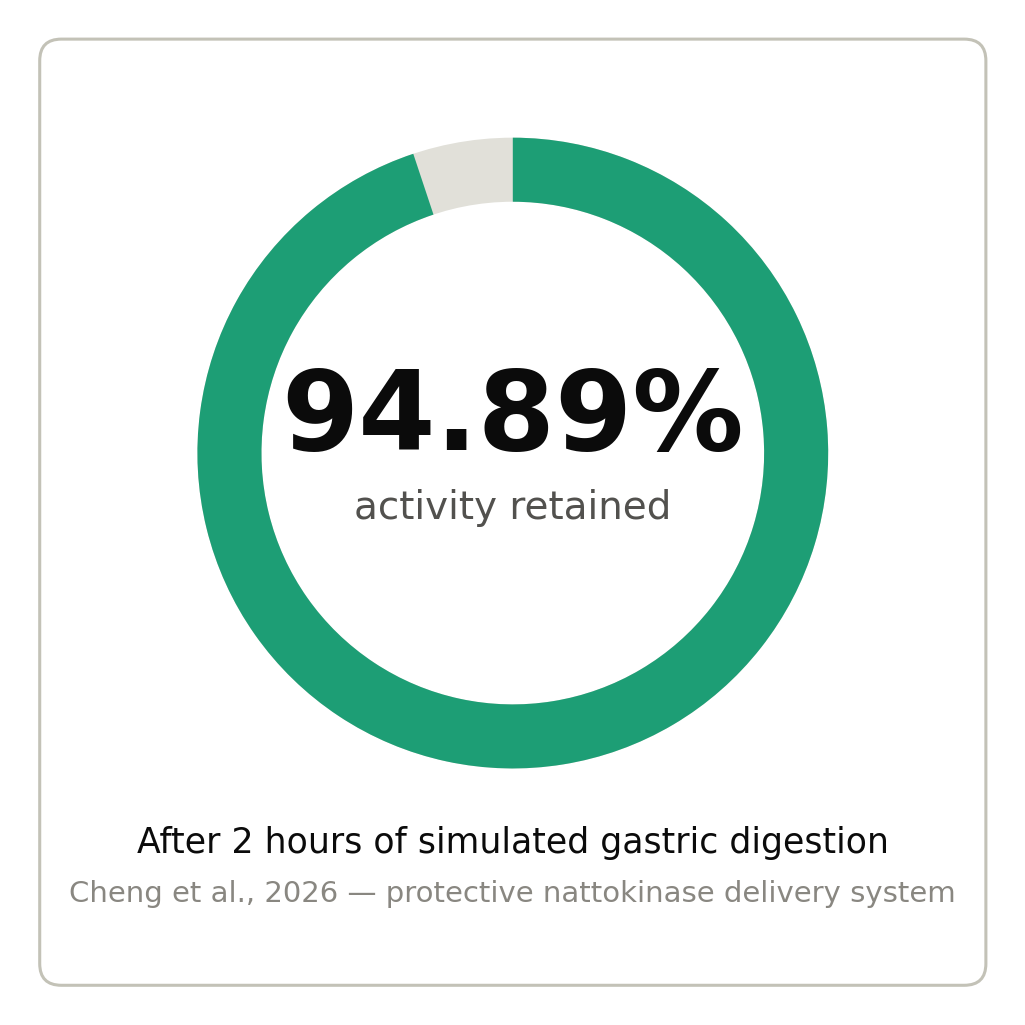
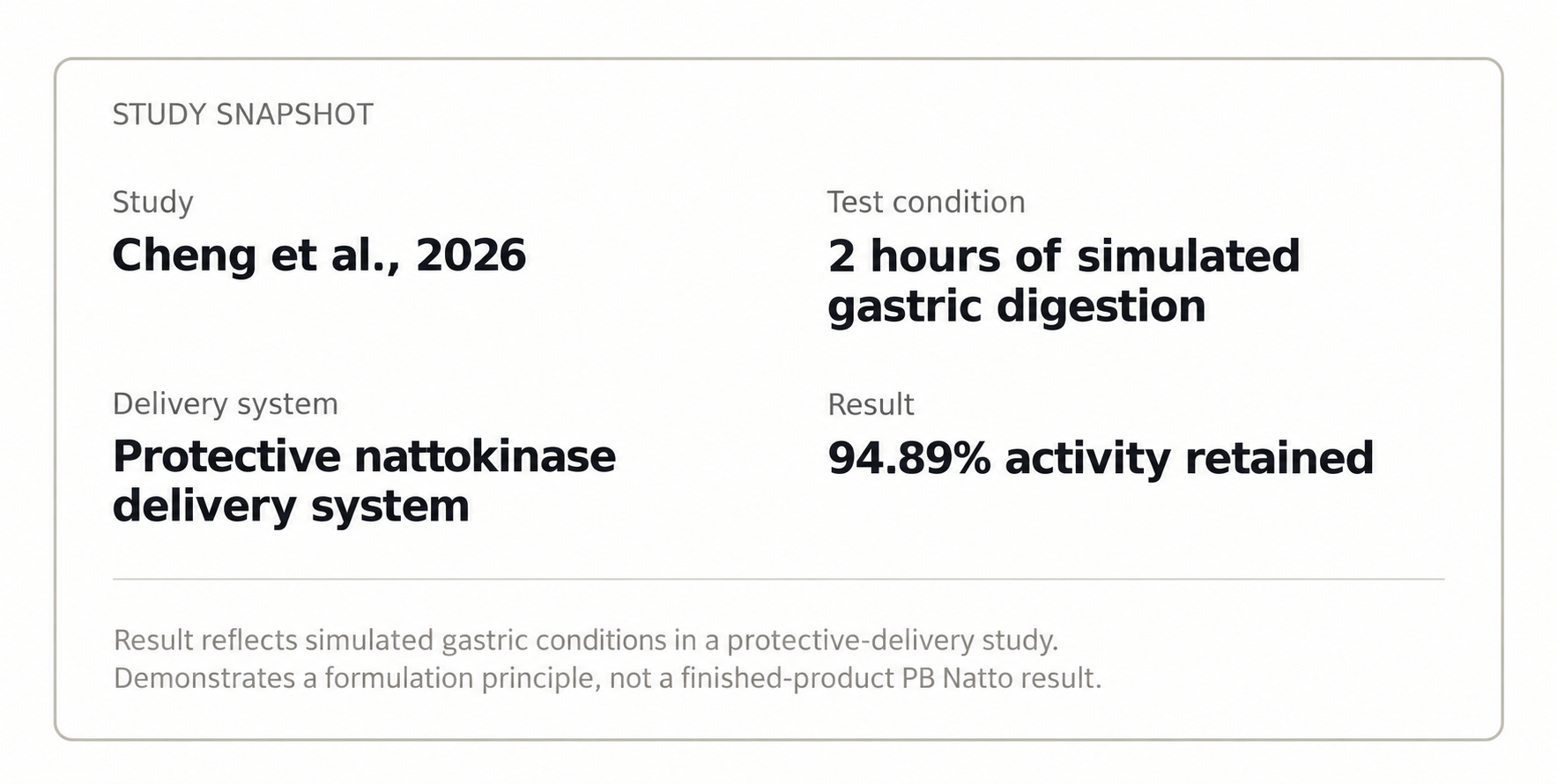
In a 2026 study, Cheng and colleagues reported that a protective nattokinase delivery system retained:
94.89% of its enzymatic activity after two hours of simulated gastric digestion.
That result demonstrates a powerful formulation principle:
Enzyme activity can be protected during gastric exposure.
Protective-delivery research also supports the broader strategy of protecting nattokinase under gastric conditions and allowing release under appropriate intestinal conditions.
The science became product development
The research does show that nattokinase activity is vulnerable under gastric conditions and that protective delivery can preserve enzyme activity through simulated gastric exposure.
So, if enzyme activity matters, protecting that activity through gastric exposure matters too.
Research on protective-delivery systems for nattokinase - including one 2026 study retaining 94.89% of activity through simulated gastric digestion - demonstrates the underlying principle. That's the same principle behind PB Natto's acid-resistant capsule.
Takeaway
Nattokinase has meaningful human research behind it, and even more meaningful outcomes that are determined by the dose, activity and formulation.
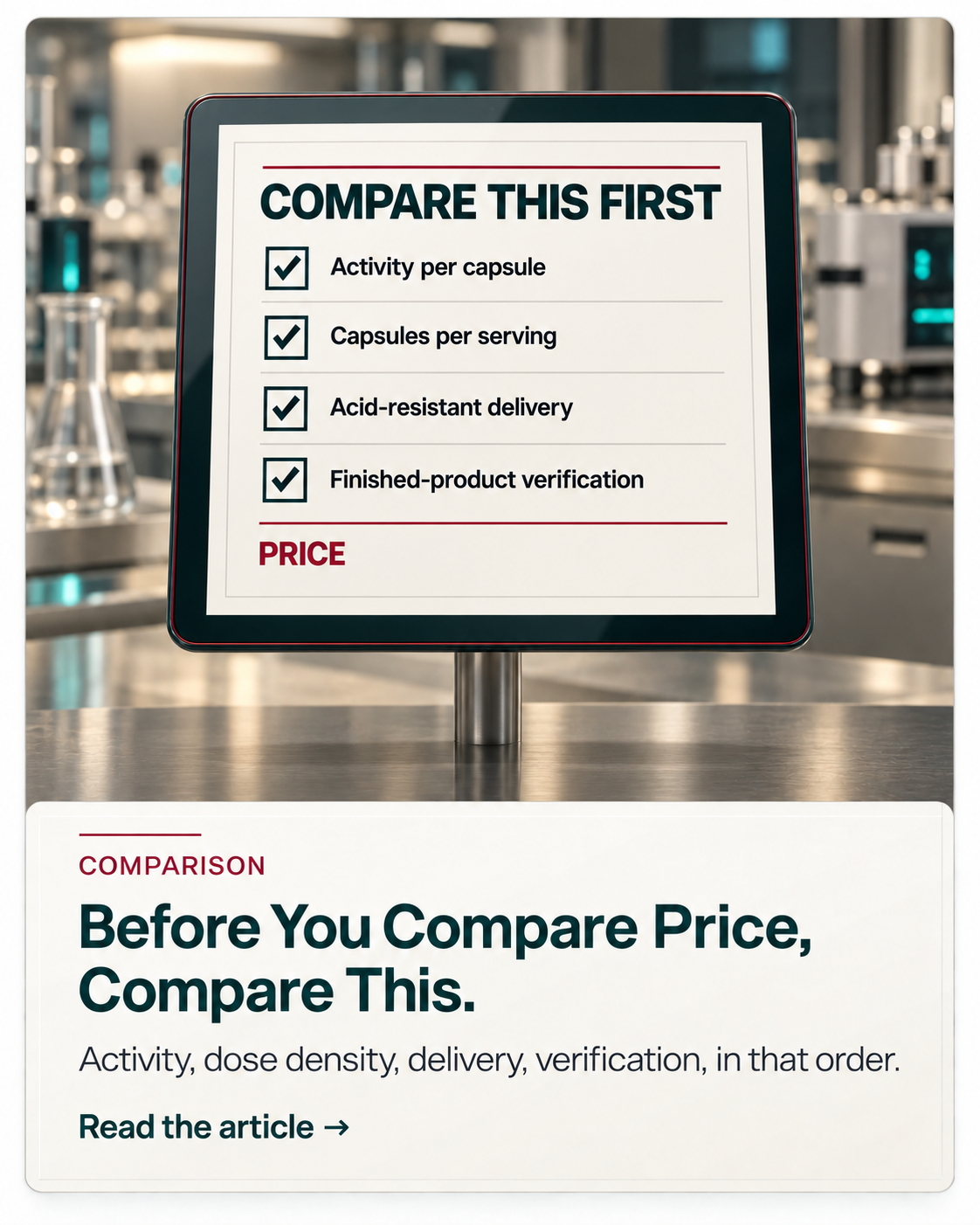
PB Natto combines high enzyme activity with acid-resistant delivery because PBE considers both parts of the same formulation problem.
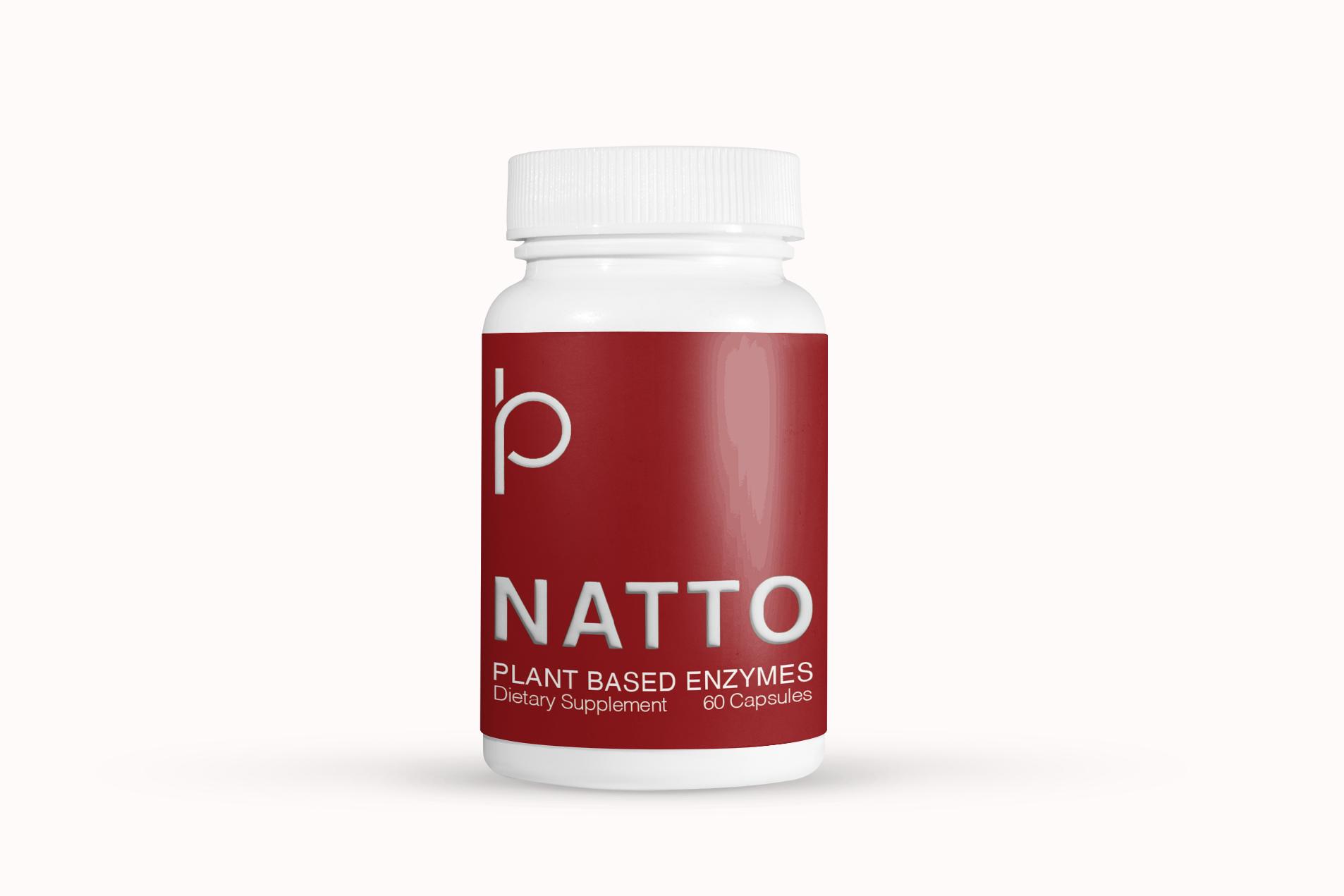
13,500 FU PB Natto
Per Acid-Resistant Capsule
High-potency nattokinase formulated to support cardiovascular health and healthy circulation.
• Guaranteed 13,500 FU per capsule
• Acid-resistant capsule
• One capsule per serving
• 60 servings • Two-month supply • $45 per month
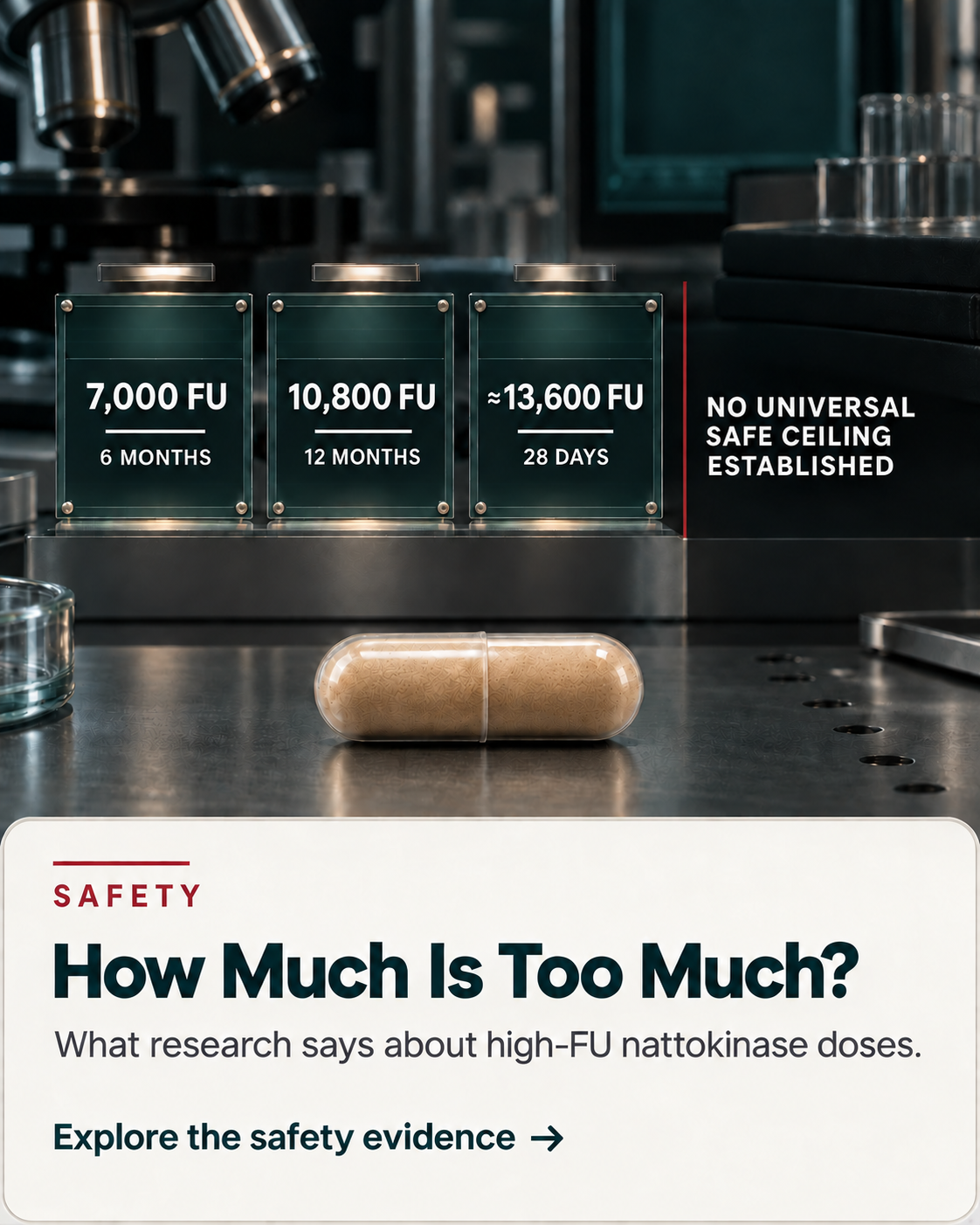
Who should not take this: Individuals taking anticoagulant or antiplatelet medications, those with bleeding disorders, or anyone with an increased risk of bleeding should consult a healthcare professional before use. If scheduled for surgery or an invasive procedure, discuss use with your healthcare professional beforehand.
Flexible payment options available at checkout.
Explore The Science Behind Nattokinase

13,500 FU PB Natto
Per Acid-Resistant Capsule
High-potency nattokinase formulated to support cardiovascular health and healthy circulation.
• Guaranteed 13,500 FU per capsule
• Acid-resistant capsule
• One capsule per serving
• 60 servings • Two-month supply • $45 per month
Who should not take this: Individuals taking anticoagulant or antiplatelet medications, those with bleeding disorders, or anyone with an increased risk of bleeding should consult a healthcare professional before use. If scheduled for surgery or an invasive procedure, discuss use with your healthcare professional beforehand.
Flexible payment options available at checkout.